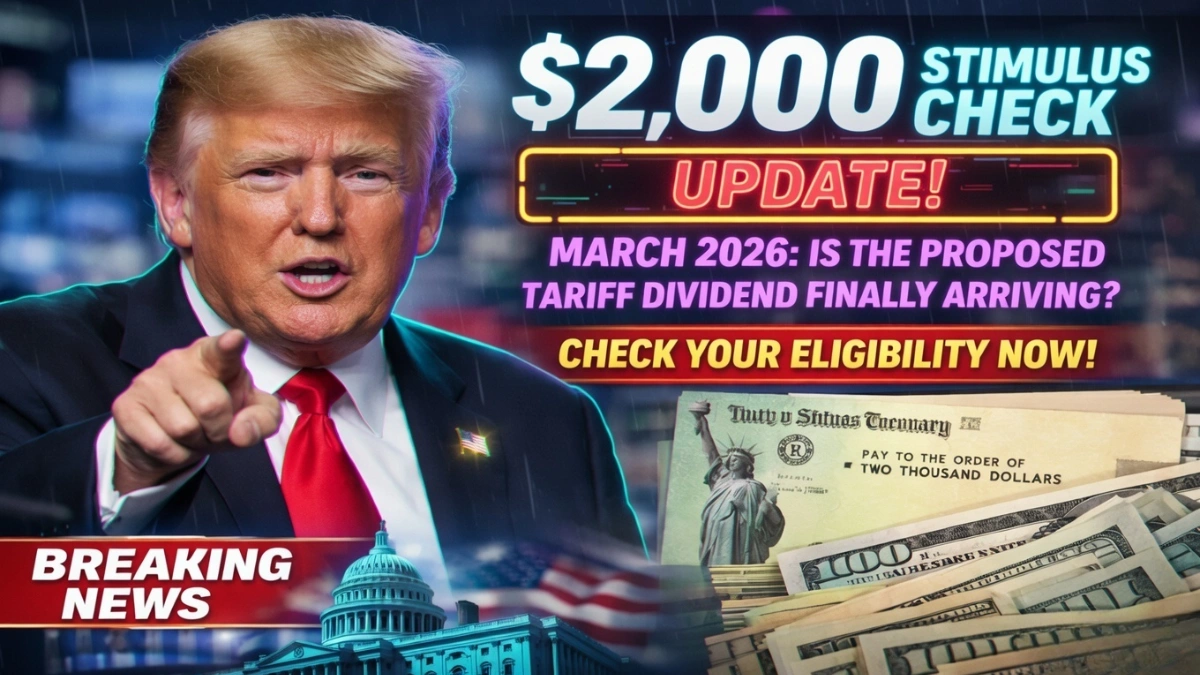
The possibility of a $2,000 stimulus check in March 2026 has sparked widespread discussion across the United States. The proposed payment is often referred to as a Tariff Dividend, a concept that suggests redistributing revenue collected from import tariffs directly to American citizens.
With inflation continuing to impact household budgets, many Americans are eager to know whether this proposed payment could become a reality. Questions about eligibility, payment timelines, and how the program might work have quickly become some of the most searched topics related to financial relief in 2026. Understanding the idea behind the tariff dividend and how it could affect taxpayers is important for anyone hoping to receive a potential $2,000 payment.
What Is the Proposed Tariff Dividend
The tariff dividend proposal suggests that revenue generated from tariffs on imported goods could be distributed back to American citizens in the form of direct payments. Supporters of the idea argue that if the government collects billions in tariff revenue, a portion of those funds could be returned to households as financial support. This concept is similar to stimulus payments issued during past economic crises, where the government provided direct financial relief to individuals and families.
If implemented, the tariff dividend could potentially provide a $2,000 payment to eligible individuals, though the exact amount and structure would depend on policy decisions and available funds.
Why the $2,000 Stimulus Check Is Being Discussed in 2026
The renewed discussion about a $2,000 stimulus check is largely connected to economic pressures such as rising living costs, housing expenses, and inflation. Policymakers and economic analysts have debated whether redistributing tariff revenue could help offset these financial challenges for American households.
The idea has gained attention because tariffs can generate substantial government revenue. Some proponents believe that sharing a portion of that revenue with taxpayers could provide financial relief without increasing traditional taxes. However, the proposal would require legislative approval and detailed policy planning before any payments could be issued.
Who Could Qualify for the $2,000 Payment
If a tariff dividend program were approved, eligibility would likely depend on several factors such as income levels, tax filing status, and residency requirements. Potentially eligible groups could include taxpayers who have filed recent tax returns, low and middle income households within certain income limits, and individuals receiving federal benefits such as Social Security.
Eligibility rules would ultimately depend on the final structure of the program if it were approved by lawmakers.
Possible Payment Methods and Distribution
If the proposed $2,000 payment were implemented, the distribution process could follow similar methods used in previous stimulus programs. Payments could be sent through direct deposit, mailed checks, or prepaid debit cards. Direct deposit would likely remain the fastest and most efficient way to deliver funds to eligible recipients. Individuals who have filed recent tax returns with updated banking information would typically receive payments first.
Those receiving benefits through government programs may also receive payments automatically depending on how the program is structured.
Challenges and Uncertainty Around the Proposal
While the tariff dividend concept has gained attention, it is important to note that it remains a proposal rather than a confirmed payment program. Implementing such a policy would require approval through the legislative process and coordination among multiple government agencies. Economic factors, political discussions, and budget considerations could all influence whether the proposal moves forward.
Until official legislation is passed and a payment program is confirmed, the $2,000 stimulus check remains a topic of discussion rather than a guaranteed benefit.
Why Many Americans Are Watching This Proposal Closely
Despite the uncertainty, millions of Americans are closely monitoring developments related to the tariff dividend proposal. For households facing rising costs of living, even a one time payment could provide temporary financial relief.
The discussion also reflects a broader debate about how government revenue should be used and whether direct payments could help strengthen household financial stability. As economic conditions evolve, proposals like the tariff dividend continue to attract attention from policymakers and the public alike.
Conclusion
The proposed $2,000 stimulus check tied to a tariff dividend has generated significant interest in March 2026. While the idea of redistributing tariff revenue directly to citizens has supporters, the program has not yet been officially approved.
Americans hoping for a payment should stay informed about policy developments and official announcements. Until legislation is finalized, the proposed $2,000 stimulus check remains under discussion rather than a confirmed financial relief program.
Disclaimer: This article is for informational purposes only. Payment programs, eligibility rules, and timelines may change based on official government decisions.