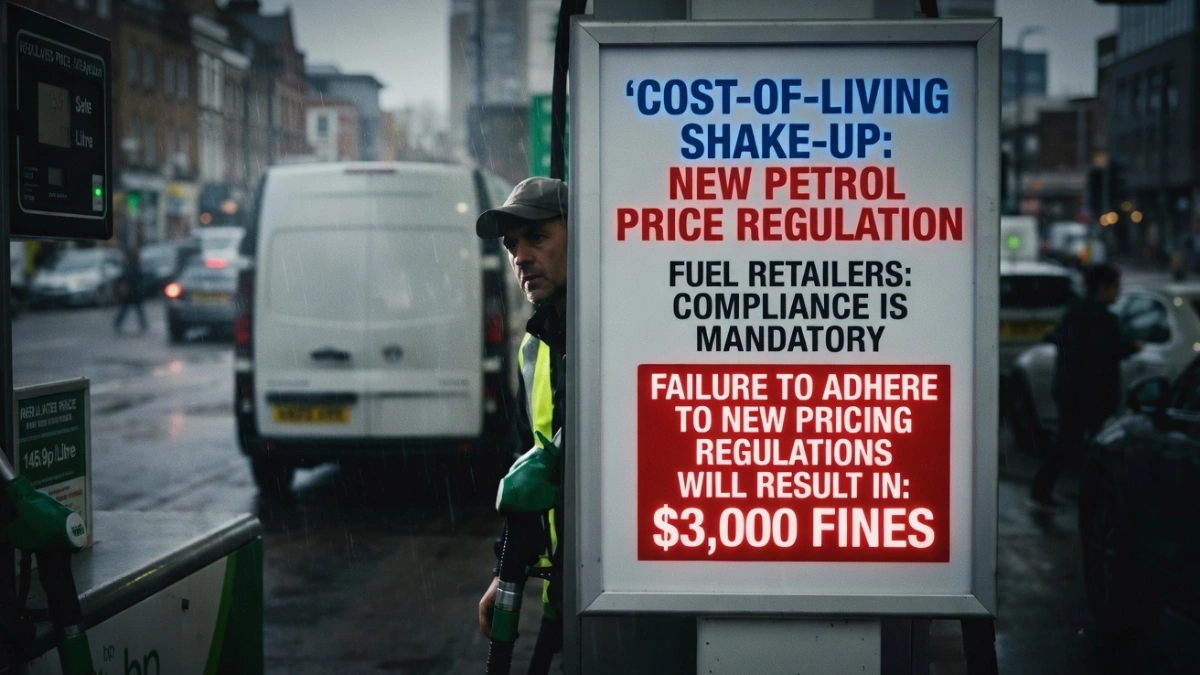
A new petrol pricing regulation is creating headlines as authorities introduce stricter rules aimed at protecting consumers and controlling unfair fuel pricing practices. Under the latest policy update, businesses that violate petrol pricing regulations could face fines of up to $3,000. The regulation is part of a broader cost-of-living strategy designed to ensure transparency in fuel pricing and prevent retailers from unfairly increasing petrol prices. With fuel costs playing a major role in household budgets, the government says the new rule is intended to protect drivers from sudden or misleading price increases.
Motorists and fuel retailers alike are now being urged to understand the updated regulation to avoid penalties and comply with the new standards.
Why the New Petrol Price Regulation Was Introduced
Fuel prices are a significant part of everyday expenses for households and businesses. Fluctuations in petrol prices can affect transportation costs, food prices, and overall economic stability. Authorities have received increasing complaints from consumers about sudden or unexplained petrol price spikes at some fuel stations. These concerns prompted regulators to review fuel pricing practices and introduce stricter monitoring rules.
The new regulation aims to ensure that petrol prices are displayed accurately and that retailers follow fair pricing practices.
Key Changes Under the New Fuel Pricing Rule
The updated rule focuses on improving transparency and preventing unfair fuel price practices. Retailers who fail to comply with the new guidelines may face financial penalties.
• Fines of up to $3,000 for petrol pricing violations
• Stricter monitoring of fuel price displays at stations
• Mandatory transparency in advertised fuel prices
• Increased inspections by regulatory authorities
• Stronger consumer protection measures
These measures are designed to prevent deceptive pricing and maintain fairness in the fuel market.
How the Regulation Will Be Enforced
Authorities are strengthening monitoring systems to ensure compliance with the new regulation. Inspections of petrol stations may increase, and regulators may review pricing practices more closely.
Enforcement teams may conduct spot checks at fuel stations to confirm that displayed prices match the actual amount charged to customers. Retailers found violating the rules could face penalties, including fines or additional enforcement actions. Digital reporting systems may also allow consumers to report suspected pricing violations.
What the Rule Means for Fuel Retailers
Fuel retailers will need to ensure that their pricing practices comply with the new regulation. This includes accurately displaying petrol prices and ensuring that customers are charged the correct amount at the pump. Retailers may also need to update internal procedures to ensure that pricing information remains transparent and consistent.
Failure to follow the updated guidelines could lead to significant financial penalties, which is why many businesses are reviewing their compliance systems.
Impact on Drivers and Consumers
For drivers, the new regulation could provide greater protection against unexpected fuel price increases. Clearer price displays and stricter enforcement may help ensure that motorists know exactly what they are paying when purchasing petrol. Consumers may also benefit from improved market transparency, which can encourage fair competition among fuel retailers.
The regulation is expected to improve consumer confidence in petrol pricing while reducing the risk of deceptive pricing practices.
Overview of the New Petrol Pricing Regulation
The table below summarizes the main aspects of the updated rule.
| Regulation Aspect | Details |
|---|---|
| Maximum Fine | Up to $3,000 for violations |
| Price Transparency | Accurate display of fuel prices required |
| Monitoring | Increased inspections and enforcement |
| Consumer Protection | Stronger rules against misleading pricing |
| Reporting | Possible consumer reporting systems |
These updates highlight the government’s effort to improve fairness in fuel pricing and reduce financial pressure on consumers.
How Consumers Can Stay Informed
Drivers are encouraged to pay attention to petrol price displays and report any discrepancies if the price charged at the pump differs from the advertised amount. Using fuel price comparison tools or apps may also help consumers find the best prices and avoid overpaying for petrol.
Remaining aware of pricing practices can help motorists benefit from the protections introduced by the new regulation.
Conclusion
The new petrol price regulation introducing fines of up to $3,000 represents a major step in addressing cost-of-living concerns and improving transparency in fuel pricing. By enforcing stricter rules on price displays and monitoring retailer practices, authorities aim to protect consumers from misleading pricing. For drivers, the regulation may lead to greater fairness and transparency when purchasing petrol. Retailers, meanwhile, must ensure full compliance with the new rules to avoid financial penalties.
Disclaimer: Fuel pricing regulations and penalties may vary depending on official government policies and regional enforcement rules.